Siam: A Land of Smiles
At Thai Herb Kitchen, we celebrate the richness of Thai culture every day, through our food, our hospitality, and our deep-rooted heritage. This story is not about conflict. It’s about history, resilience, and peace. It’s about who we are, where we come from, and the flavors that carry our past forward.
To understand Thai food is to understand Thai history. And to know our history is to honor every dish, every temple, every tradition passed down through generations.
🍚 Stories from the Kitchen, Stories from Surin
Our kitchen is built on more than recipes. It’s built on memory. On family. On a connection to the land that stretches beyond ingredients and into identity.
Our Head Chef and Sous Chef were both born and raised in Surin Province, a beautiful region in Northeastern Thailand. Their families have lived there for generations, rooted in the spiritual soil of rice fields, ancient temples, and age-old recipes. They’ve grown up listening to stories from elders about a land once whole, once undivided by colonial lines, where culture, trade, and kinship flowed freely.
Every meal we serve is infused with that history. Each herb and spice carries memories of Surin, the rhythm of the markets, the fragrance of lemongrass and holy basil, the laughter of family gatherings, and the deep pride of being Thai.
Our chefs often reflect on childhood meals—sticky rice with grilled chicken, papaya salad with fermented fish, steaming bowls of spicy soup served under wooden homes on stilts. These are not just flavors—they are lessons, memories, and acts of preservation. To them, cooking is not just a job. It is an act of cultural continuity.
📜 Remembering Siam: A Shared Heritage
Long before modern borders were drawn, the region that includes today’s Thailand, Cambodia, Laos, and Vietnam was shaped by centuries of shared culture. Thailand, then known as Siam, was a central force, politically, spiritually, and culturally. We shared languages, religions, and ways of life.
Trade routes spanned the region. Temples echoed similar prayers. Dances, fabrics, folklore, and food transcended borders. These lands breathed together, lived together, evolved together.
Then came the colonial era. Foreign powers redrew our region’s map. France imposed borders that divided communities, disrupted cultural unity, and left a legacy of confusion and sorrow. Lands that once moved with a shared rhythm were pulled apart.
We do not recount this history in anger. We honor it to remember. We carry it with humility, and we share it through the stories behind our dishes. We remember not to claim, but to preserve, to keep the spirit of unity alive through food and hospitality.
⛩️ Preah Vihear and the Echo of Time

One such story belongs to Preah Vihear, a sacred temple with roots that stretch deep into the spiritual and cultural soil of Southeast Asia. Though now positioned across a modern border, the temple and its surrounding landscape remain close to the heart of the Thai people.
It’s not just about territory, it’s about identity, memory, and respect for the legacy left by our ancestors. We acknowledge the complexities of our region’s past, but we never forget our place in it.
In Surin Province, many temples still stand proudly on Thai soil, temples that have watched over our communities for centuries. Each carries a legacy, a story, and a spirit that cannot be erased. These sacred places are not only monuments of faith but also living cultural records of our shared history with the ancient Khmer empire. We honor their beauty and protect them with love and respect.
- Prasat Sikhoraphum

- Built in the 12th century, this majestic Khmer-era temple features five sandstone towers and elaborate carvings that reflect both Hindu and Buddhist influences. The towers, arranged in a quincunx, represent sacred Mount Meru. It remains a spiritual and architectural gem, visited by locals and travelers alike.
- Prasat Ban Phluang
- Dating back to the 11th century, this smaller temple is renowned for its intricate lintels and peaceful setting. Constructed from laterite and decorated with sandstone carvings, it reflects the harmony of Khmer design and spiritual devotion. Pilgrims still leave offerings and flowers on its stone steps.
- Prasat Ta Muean Thom, Ta Muean, and Ta Muean Tot

- Located near the Dangrek Mountains, these three temples played vital roles in ancient travel and trade.
- Prasat Ta Muean Thom is the largest, with impressive gopuras and a central sanctuary. Its strategic location suggests it was a key checkpoint between Angkor and Phimai.
- Prasat Ta Muean may have served as a resting point, with its more compact layout.
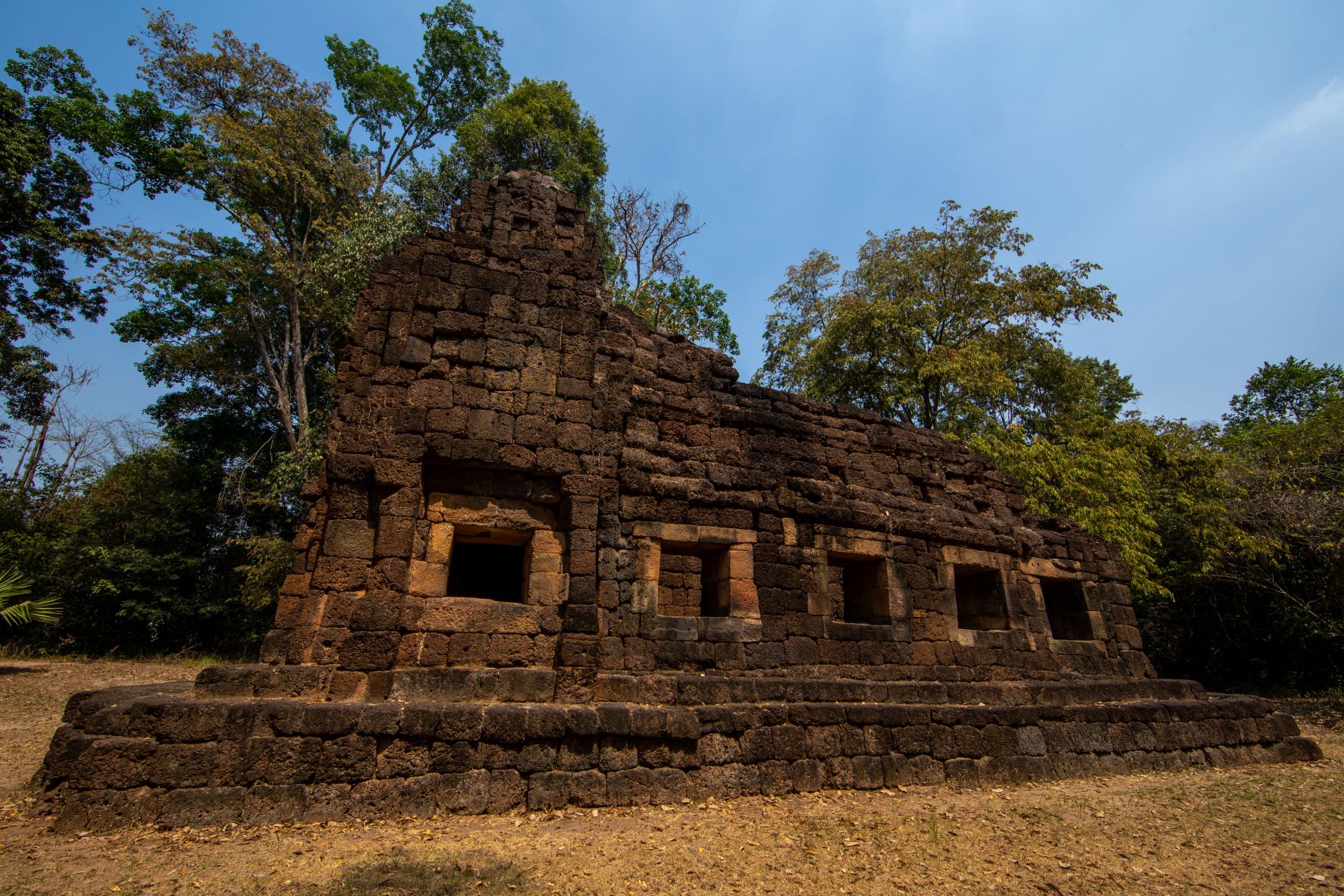
- Prasat Ta Muean Tot is believed to have been a hospital chapel, one of many commissioned by King Jayavarman VII, offering healing to travelers and the sick.
- Prasat Ta Khwai (also known as Prasat Ta Takuai)
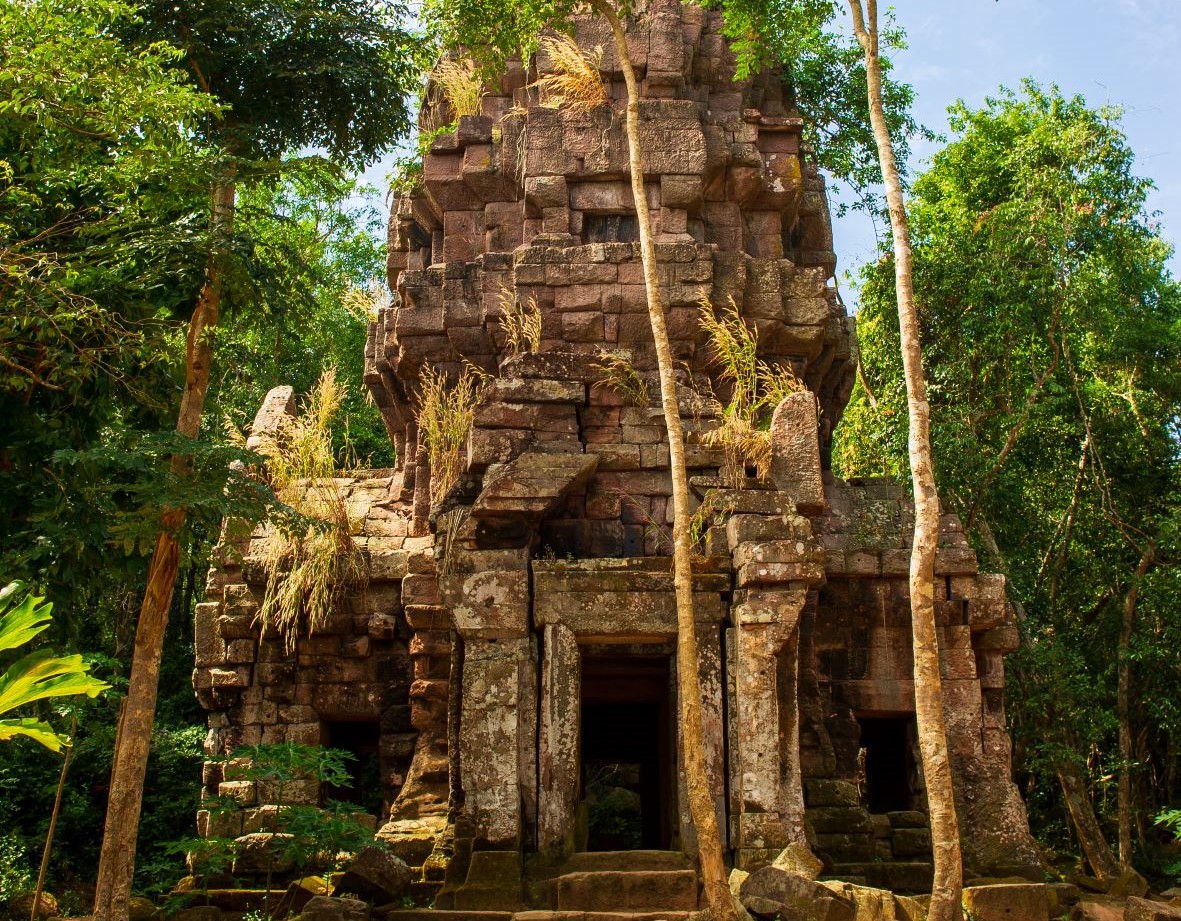
- Situated near the Thai-Cambodian border, this 11th–12th century Hindu temple rests in tranquil seclusion atop a ridge. Dedicated to Shiva, it houses a sacred linga in its inner sanctuary. Despite weathering centuries, its central tower and gateway arch remain sturdy, a quiet sentinel of time and devotion.
These are not just places of worship; they are guardians of history, culture, and faith. We will continue to protect them, care for them, and pass on their stories to future generations. They are ours, not because of lines on a map, but because they live in our hearts and in our way of life.
🛡️ Heroes of Siam: Guardians of Thai Heritage
Just as our temples tell stories of faith, so too do our heroes tell stories of courage and unity. Throughout Siam’s long and storied past, great individuals have risen to protect our land, culture, and people. These heroes are the heart of our history.
- King Naresuan the Great – Revered as a national hero, King Naresuan declared Siam’s independence from Burmese rule in the late 16th century. Known for his legendary elephant duel, he symbolizes sovereignty, bravery, and the unbreakable spirit of the Thai people.
- Queen Suriyothai – A symbol of sacrifice and loyalty, Queen Suriyothai rode into battle in disguise to defend her husband and kingdom. She gave her life in the mid-1500s protecting Siam from invasion. Her legacy lives on as a testament to strength and devotion.
- King Taksin the Great – After the fall of Ayutthaya in 1767, King Taksin reunited the Thai kingdom and restored independence. A warrior and a visionary, he established the Thonburi Kingdom and laid the groundwork for modern Thailand’s resilience.
- King Rama V (King Chulalongkorn)
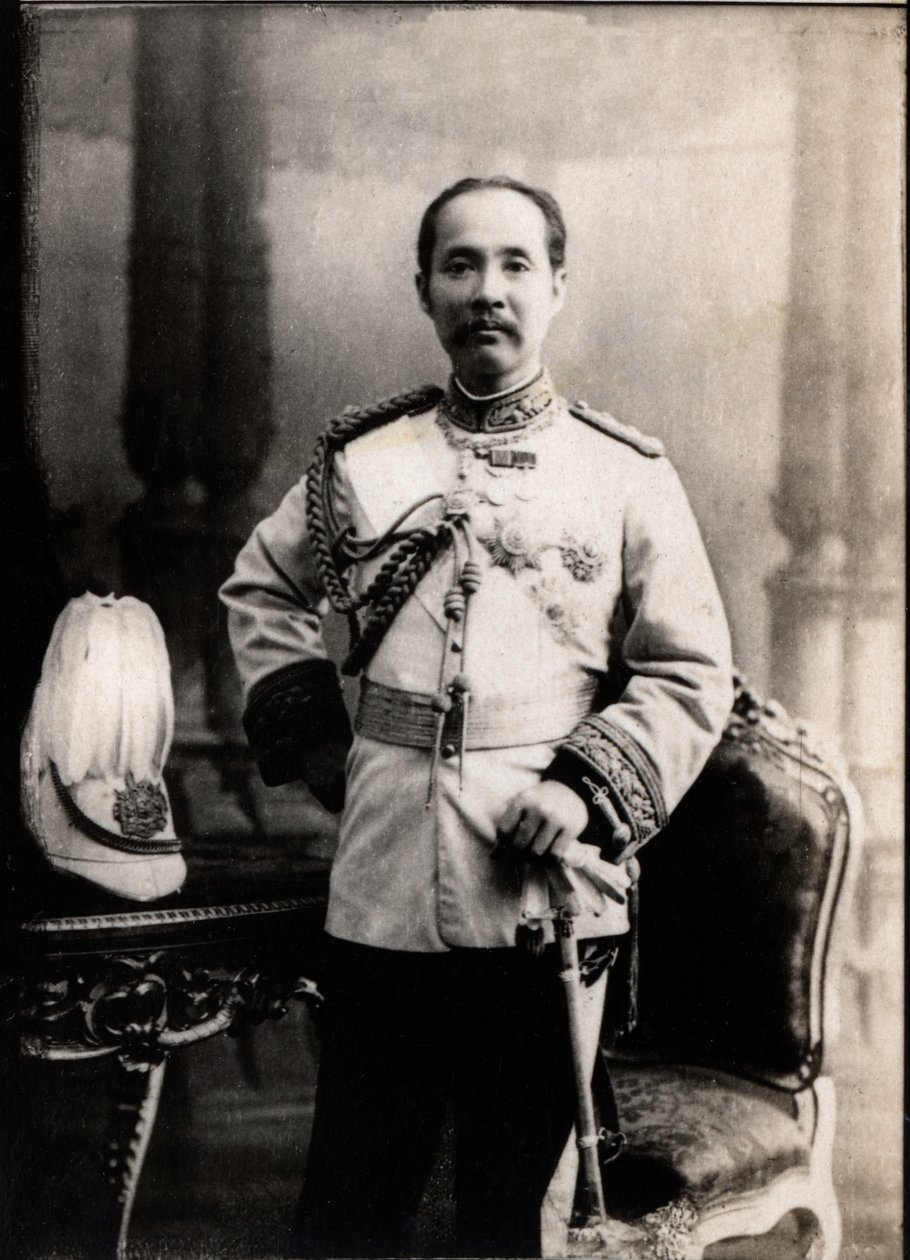
- Widely respected for modernizing Siam and preserving its sovereignty during the height of European colonialism, King Rama V introduced progressive reforms, ended slavery, and maintained peace through diplomacy. He is remembered for his wisdom and deep care for the Thai people.
These individuals, through battle, reform, and sacrifice, have helped shape Siam into the Thailand we know today. Their values are embedded in our national identity and reflected in our everyday actions, from how we greet one another to how we honor our elders and heritage.
🥘 From Surin with Pride
For our chefs, history is not something distant. It’s lived and felt. The fields where they once played, the rivers they crossed, the temples they prayed in, these are the roots that nourish the food we serve today.
In every mortar we pound, every coconut we crack, every chili we slice, there is a sense of purpose. Our dishes tell the stories of borderland life: spicy, vibrant, full of character, and resilient.
Surin’s cuisine is known for its bold flavors and Isaan influences. Fermented fish, sticky rice, local herbs, and grilled meats tell of a resourceful, generous, and deeply proud people. Every Thai Herb Kitchen dish rooted in Surin carries this signature.
And so, when we prepare a curry or steam jasmine rice, it is more than a meal—it is a tribute. To Surin. To Siam. To the enduring spirit of a people who continue to cook with love, live with pride, and stand for peace.
🌍 Through Food, We Connect
Thai cuisine reflects the richness of our shared heritage. Influenced by neighboring cultures, it embraces diversity while remaining unmistakably Thai. In every dish, we remember how interconnected we all are.
Our food tells stories of trade, friendship, migration, and resilience. It reminds us that borders may divide land, but they cannot divide spirit.
When we serve Tom Yum or Laab, we serve more than food, we serve connection. We bring people together around the table, regardless of background, to share in something simple and profound: nourishment and respect.
This is the mission of Thai Herb Kitchen. To cook, to connect, and to celebrate unity through flavor.
Standing for Peace
At Thai Herb Kitchen, we believe in peace, in unity, and in remembering our roots. We believe in sharing the real taste of Thailand, not just through food, but through stories that bring us closer together.
We do not raise our voices in anger, but in pride. Pride in who we are. Pride in where we come from. And pride in the peaceful values we continue to hold.
Peace, for us, is not passive. It’s a daily act, choosing kindness, remembering where we came from, and honoring the shared humanity in all of us.